

The program operates across three complementary spaces, integrating academic learning with practical experience in civic education for democracy.
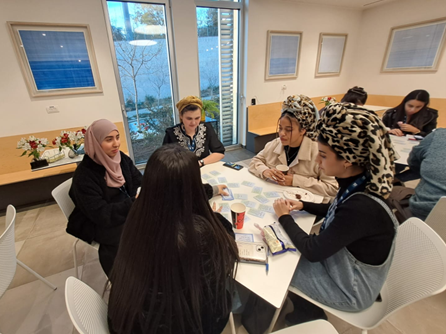
Core – Inter-Institutional Arena
The core of the program is the inter-institutional space, where students from a variety of training institutions meet and create a cross-border professional community. Here, barriers between sectors and cultures are broken down, authentic dialogue develops, and meaningful connections are forged. The “Core” hosts joint learning days and the development of civic-educational initiatives integrated into schools, the community, and the public sphere. This serves as modeling for the educational practice the program seeks to cultivate: education that transcends institutional and sectoral boundaries, reflecting a broad responsibility for the future of Israeli society.
Integration – Local Academic Learning
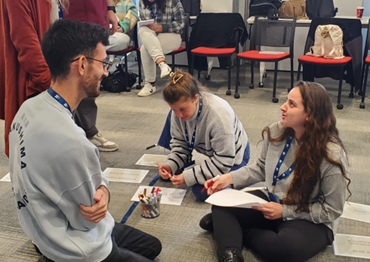
In each partner institution, an annual course operates as an academic branch of the program. These courses serve as an anchor for personal and group processing, deepening professional-civic identity, and the planning and implementation of initiatives within the local context. Learning combines theoretical models, reflection, and practical experience: case studies, observations, and project development. This provides the link between the inter-institutional arena and the specific needs, sensitivities, and challenges of each educational community.
Publicity – Voice and Influence in the Public Sphere
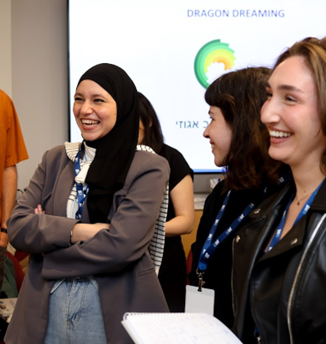
The public dimension aims to influence the educational-social discourse in Israel. Student initiatives move beyond the classroom, gaining visibility on social media, at conferences, and in various public arenas, sometimes coming to fruition through collaborations with academic institutions and civil society organizations. The program also hosts national conferences that bring together students from all training institutions, thereby expanding the range of partners and creating a broad educational network. Publicity is also expressed through public writing, media presence, and academic research that documents and analyzes the program’s processes. In this way, a tangible contribution is made to shaping democratic culture in Israel and building a generation of educators who see themselves as agents of social change.
